Keynote Speakers
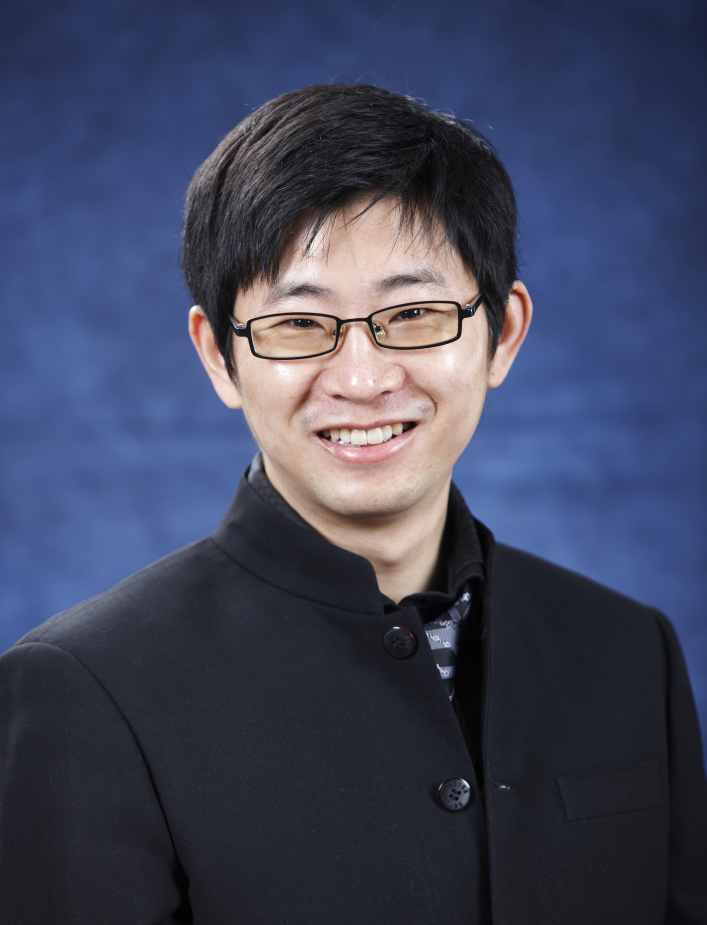
Prof. Rui Zhang IEEE Fellow, Academician of Singapore Academy of Engineering, The Chinese University of Hong Kong, Shenzhen, Singapore Academy of Engineering Dr. Rui Zhang received the B.Eng. (First-Class Hons.) and M.Eng. degrees from National University of Singapore, and the Ph.D. degree from Stanford University, Stanford, CA USA, all in electrical engineering. From 2007 to 2009, he worked as a researcher at the Institute for Infocomm Research, ASTAR, Singapore. In 2010, he joined the Department of Electrical and Computer Engineering of National University of Singapore, where he was appointed as a Provost’s Chair Professor in 2020. Since 2022, he has joined the School of Science and Engineering, The Chinese University of Hong Kong, Shenzhen, as a Principal’s Diligence Chair Professor. His current research interests include UAV/satellite communication, wireless power transfer, intelligent reflecting surface and reconfigurable MIMO, optimization methods, etc. He has published over 450 papers in the field of wireless communications, which have been cited more than 60,000 times, with the h-index over 120. He has been listed as a Highly Cited Researcher by Thomson Reuters / Clarivate Analytics since 2015. He was the recipient of the IEEE Communications Society Asia-Pacific Region Best Young Researcher Award in 2011, the Young Researcher Award of National University of Singapore in 2015, the Wireless Communications Technical Committee Recognition Award in 2020, and the IEEE Signal Processing and Computing for Communications (SPCC) Technical Recognition Award in 2021. He received 14 IEEE Best Paper Awards, including the IEEE Marconi Prize Paper Award in Wireless Communications in 2015 and 2020, the IEEE Signal Processing Society Best Paper Award in 2016, the IEEE Communications Society Heinrich Hertz Prize Paper Award in 2017, 2020 and 2022, the IEEE Communications Society Stephen O. Rice Prize in 2021, etc. He is now an editor for the IEEE Transactions on Communications. He served as a member of the Steering Committee of the IEEE Wireless Communications Letters, and a Distinguished Lecturer of IEEE Signal Processing Society and IEEE Communications Society. He is a Fellow of the IEEE and the Academy of Engineering, Singapore. Title:Intelligent Reflecting Surface (IRS) Empowered Wireless Networks: Recent Advance and Future Trend Abstract:Intelligent Reflecting Surface (IRS) is a digitally controlled metasurface that can be densely deployed in wireless networks to reconfigure the propagation channels among wireless nodes by dynamically tuning the signal reflection. IRS is able to not only significantly improve the network spectral and energy efficiency for communications, but also greatly enhance the performance for other emerging applications such as wireless power transfer, sensing and localization, etc. The existing research on IRS has mainly considered wireless systems with single-IRS-reflections at the link level, which does not reveal the full potential of IRS for future wireless networks. In this talk, we will focus on the main design challenges in efficiently integrating IRS to wireless networks, including IRS reflection optimization, channel acquisition and optimal deployment, with an emphasis on double-/multi-IRS-reflections. Furthermore, we will present emerging new architectures of IRS and their advantages for future applications. We will conclude the talk by discussing research directions worthy of further investigation in the future. |
|
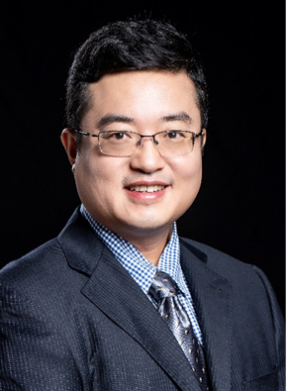
Prof. Gexiang Zhang IET Fellow, IEEE Senior Member, Foreign Member of Russian Academy of Natural Sciences, Chengdu University of Information Technology, China Prof. Zhang received his Ph.D. degree in 2005 from Southwest Jiaotong University, Chengdu, China. Now he is a full professor and the Dean of School of Automation, Chengdu University of Information Technology, Chengdu, China. He was a visiting professor in Department of Computer Science, The University of Sheffield, UK, a senior visiting professor at the Department of Computer Science and Artificial Intelligence, Universidad de Sevilla, Spain, and a visiting professor in Department of Chemistry, New York University, USA. He is the President of International Membrane Computing Society (IMCS), an editorial board member of Axioms and International Journal of Parallel, Emergent and Distributed Systems. He is the co-winner of Grigore Moisil Prize of the Romanian Academy in 2019. He is listed in World’s Top 2% Scientists and in Highly Cited Chinese Researchers by Elsevier. Research areas include artificial intelligence, Intelligent robots, smart grid and intelligent control. He is the author/co-author of more than 200 publications, three monographs, and (lead) guest editor/co-editor of more than 10 volumes/proceedings.
Abstract: Artificial neural networks (ANN) can be regarded as the engine of artificial intelligence (AI), which is always leading the development with disruptive innovation. ANN has undergone three generations with different computational units. The first generation is characterized by only giving digital outputs like Hopfield nets. The second generation is able to compute functions with analog input and output such as BP network. The third generation encodes analog variables by time differences between pulses. Except for spiking neural networks, spiking neural P systems are also important branch of the third generation of ANN. This talk emphasizes the standard definition, the computing process, information encoding, theoretical results with respect to Turing completeness, application results and simulation implementation. |
|

Prof. Haijun Zhang IEEE Fellow, IET Fellow, University of Science and Technology Beijing, China Haijun Zhang (F'23) is currently a Full Professor and Associate Dean in School of Computer and Communications Engineering at University of Science and Technology Beijing, China. He was a Postdoctoral Research Fellow in Department of Electrical and Computer Engineering, the University of British Columbia (UBC), Canada. He serves/served as Track Co-Chair of VTC Fall 2022 and WCNC 2020/2021, Symposium Chair of Globecom'19, TPC Co-Chair of INFOCOM 2018 Workshop on Integrating Edge Computing, Caching, and Offloading in Next Generation Networks, and General Co-Chair of GameNets'16. He serves/served as an Editor of IEEE Transactions on Communications, and IEEE Transactions on Network Science and Engineering. He received the IEEE CSIM Technical Committee Best Journal Paper Award in 2018, IEEE ComSoc Young Author Best Paper Award in 2017, IEEE ComSoc Asia-Pacific Best Young Researcher Award in 2019, IEEE ComSoc Distinguished Lecturer. He is a Fellow of IEEE. Title:6G Network Optimization Abstract:This talk will identify and discuss technical challenges and recent results related to 6G mobile network optimization. The talk is mainly divided into four parts. The first part will introduce 6G mobile networks, discuss about the 6G mobile networks architecture, and provide some main technical challenges in 6G mobile networks. The second part will focus on the issue of resource management in 6G networks and provide different recent research findings that help to develop engineering insights. The third part will address the machine learning and deep learning method based future 6G networks and address some key research problems. The last part will summarize by providing a future outlook of 6G mobile network optimization. |
|

Prof. Min Chen IEEE Fellow, IET Fellow, South China University of Technology, China Min Chen is a professor in School of Computer Science and Engineering at South China University of Technology. He was a full professor in School of Computer Science and Technology at Huazhong University of Science and Technology (HUST) since Feb. 2012. He is the director of Embedded and Pervasive Computing (EPIC) Lab at HUST. He was an assistant professor in School of Computer Science and Engineering at Seoul National University since 2009. He worked as a Post-Doctoral Fellow in Department of Electrical and Computer Engineering at University of British Columbia from 2006 to 2009. He is the founding Chair of IEEE Computer Society Special Technical Communities on Big Data. He was General Co-Chair for IEEE CIT-2012, Tridentcom 2014, Mobimedia 2015, Co-Chair of IEEE ICC 2012-Communications Theory Symposium, and Co-Chair of IEEE ICC 2013-Wireless Networks Symposium and Symposium Chair of IEEE Globecom 2022 eHealth, etc. He has 300+ publications, including IEEE JSAC, IEEE TNNLS, AAAI, Advanced Materials、Science, Nature Communications, etc. He has published 12 books, including Big Data Analytics for Cloud/IoT and Cognitive Computing (2017) with Wiley. His Google Scholar Citations reached 41,000+ with an h-index of 96. His top paper was cited 4,300+ times. He was selected as ESI Highly Cited Researcher from 2018 to 2022. He got IEEE ICC Best Paper Award in 2012, IEEE Communications Society Fred W. Ellersick Prize in 2017, the IEEE Jack Neubauer Memorial Award in 2019, and IEEE ComSoc APB Oustanding Paper Award in 2022. His research focuses on cognitive computing, 5G Networks, wearable computing, big data analytics, robotics, fabric computing, deep learning, emotion detection, and mobile edge computing, etc. He is an IEEE Fellow and IET Fellow. Title: Digital Intelligent World Empowered by 6G Fabric Smart Space Abstract:In future network, the provisioning of ultra-low latency, non-intrusive and immersive service experience creates various challenges, among which continuously obtaining multi-modal information without disturbing user is critical. This talk introduces the development of various functional fabrics, based on which large-scale non-disturbance sensory data can support a device-free intelligence-releasing model in the digital intelligent world. This talk also introduces various application examples for human activity capturing and healthcare in 6G fabric smart space. |
|